
White Label SEO vs. In-House: Which Is Better for Growing Agencies?
- digitalcordex
- 0 Comments
Growing a digital agency comes with a big question: when offering SEO services, should you build an in-house SEO team or partner with a white label SEO provider? Both routes have their merits. On one hand, hiring your own team gives you direct control and brand intimacy. On the other, outsourcing to a white label SEO firm can save costs and tap into specialized expertise. Agency owners across the U.S. often grapple with this choice as they scale up. In this article, we’ll break down a fair, side-by-side comparison of white label vs. in-house SEO along key factors like cost, control, scalability, client retention, turnaround time, recruitment challenges, and technology. We’ll also sprinkle in real data and insights (no fluffy claims here!) to help you make an informed decision. By the end, you should have a clear picture of when white label SEO makes more sense – and why many growing agencies are leaning that way.
The decision between in-house and white label SEO is like choosing between building your own network of expertise versus plugging into an existing one. The image above symbolizes the interconnected web of specialized SEO resources a white label partner can provide, compared to a single in-house team’s capacity.
What Exactly Are “White Label” and “In-House” SEO?
Before diving into comparisons, let’s clarify the terms:
-
In-House SEO
: This means you hire your own SEO specialists or team within your agency. They are your employees, dedicated to handling SEO for your clients. In-house teams work closely with your agency’s other departments, share your company culture, and focus only on your clients’ campaigns. For example, an in-house SEO specialist might coordinate directly with your account managers and content writers every day, operating as part of your core team. -
White Label SEO
This refers to outsourcing SEO work to an external provider who remains “invisible” to your clients – the work is delivered under your agency’s branding. Essentially, a white label SEO partner is a third-party SEO agency or team that handles the research, on-page and off-page optimization, content, and reporting on your behalf. You present the results to your client as your agency’s work. It’s like hiring an external SEO department on-demand. Notably, white label providers often service multiple agencies; for instance, SEO.co claims it has serviced thousands of marketing agencies with white-label SEO since 2010 – showing how common this practice is in the industry showing how common this practice is in the industry.
In short, in-house = do it yourself with staff, while white label = outsource to experts who ghost-operate for you. Both models aim to achieve great SEO outcomes for clients, but they differ in execution. Now, let’s compare them across the factors that matter most to a growing agency.
White Label vs. In-House SEO: Quick Comparison
To set the stage, here’s a side-by-side overview of how white label and in-house SEO stack up on key considerations:
|
Factor |
White Label SEO (Outsourced) |
In-House SEO (Agency’s Own Team) |
|
Cost |
Typically pay per project or monthly package; no full-time salaries or benefits. Often 30–70% lower costs vs. in-house. |
Fixed costs of salaries, benefits, and tools. High upfront investment; e.g. ~$75k/year per specialist. |
|
Control & Oversight |
Less direct day-to-day control; rely on partner’s processes and communication. You focus on results and client management. |
Full control over strategy, execution, and timing. Team is embedded in your culture and readily accessible for quick changes. |
|
Scalability |
Highly scalable on short notice – can handle more client campaigns by leveraging the partner’s larger team. (E.g., one white label team can manage 100+ sites easily.) |
Limited by your team size; scaling up means recruiting and training new hires, which takes time and resources. |
|
Expertise & Skills |
Access to diverse SEO experts (technical, content, link-building, etc.) without hiring each role. Brings fresh perspectives and up-to-date knowledge. |
Institutional knowledge of your niche/clients. Team focuses solely on your clients, but skillset is limited to who you can hire. Training needed to keep up with new SEO trends. |
|
Turnaround Time |
Established processes and larger staff often mean faster implementation for tasks and campaigns. You benefit from their efficiencies and tools. |
Potentially slower if the team is small or juggling many tasks. New initiatives may be slower until you hire more or if staff are learning on the job. |
|
Tools & Technology |
Advanced SEO tools are provided by the partner (cost is spread across their many clients). You get enterprise-level software and reporting included. |
Must purchase your own SEO software and subscriptions. |
|
Hiring & HR Effort |
No need to recruit or retain specialized talent – the partner handles that. Easier to replace the provider if needed. |
Recruitment and retention are your responsibility (Robert Half). |
|
Client Perception |
Seamless to clients if done right – they interact with your agency as usual. You can offer more services under your brand, boosting your agency’s capabilities. |
Clients know your team is in-house. Direct accountability if things go wrong, but also a sense of “dedicated team” presence. Capability limited to your team’s expertise. |
|
Profit Margin |
Good providers leave room for ~40–50% margins for your agency. |
Your margin depends on labor efficiency. High fixed costs can eat into profit if client volume fluctuates. Utilization needs to be high to maintain healthy margins. |
The table above paints with broad strokes. Next, let’s dig into each of these areas in detail, with data and real-world context, so you can gauge which model fits your agency’s growth strategy.
Cost Considerations and ROI
From an ROI perspective, white label can often improve margins. You’ll typically negotiate a rate with the provider (whether a monthly retainer or project fee) that allows your agency to mark up the service for your client. For example, if a white label partner charges you $800 per month for SEO work that you resell to your client at $1,500, you’ve got a ~$700 profit margin while still likely undercutting the cost of hiring when considering all factors. Top white label SEO firms often emphasize enabling 40–50% profit margins for agencies. In contrast, with in-house teams, any downtime or inefficiency directly eats into your profit. If your SEO specialist has a light client load one month, you’re still paying full salary.
Of course, cost isn’t everything – but it’s often the initial driver for agencies, especially small and mid-sized ones, to consider outsourcing. If your agency is in growth mode, keeping costs flexible and aligned with revenue (i.e., more clients = higher outsourcing costs, but also higher revenue, and vice versa) can be very attractive. Outsourcing turns a lot of fixed costs into variable costs, which lowers financial risk as you grow.
Control, Communication and Oversight
Cost aside, control over work and quality is a crucial consideration. With an in-house SEO team, you have complete oversight of their daily activities. You can walk over to your SEO specialist’s desk (or Slack them) to get real-time updates, brainstorm on the fly, or pivot strategy quickly. You set the priorities and there’s no middleman – this immediacy is a big plus. In-house teams are steeped in your agency’s culture and processes. They attend your staff meetings, understand each client’s nuances deeply, and follow your methodologies. As a result, some agency owners feel more confident that an in-house person “knows our clients and tone” intimately.
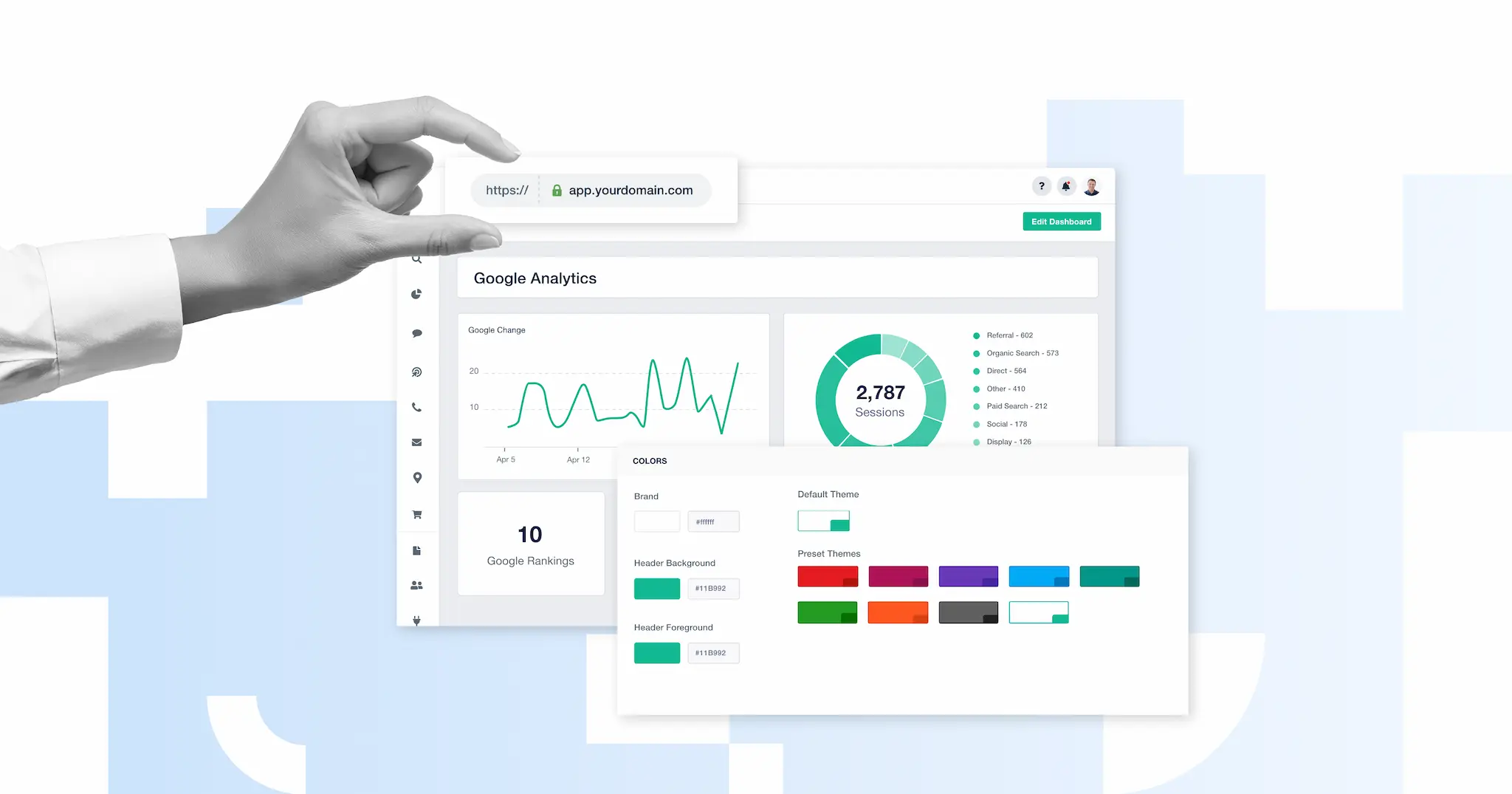
In contrast, white label SEO involves relinquishing some direct control. You’ll be communicating with your outsourced team through calls, emails, or a project management system, rather than face-to-face. There can be a slight learning curve at the start as the external team gets to know your clients’ profiles and your preferred style. However, a good white label partner will make communication smooth with regular reports and check-ins. It’s worth noting that any reputable white label agency understands they must act as an extension of your team. Many provide detailed monthly performance reports, campaign updates, and are responsive to ad-hoc requests – they know your satisfaction (and your clients’ results) is key to retaining your business.
One downside often cited with outsourcing is the potential for miscommunication or delays in relaying information. Without direct daily oversight, you might worry “Is the work actually getting done right now?” or have to wait for an update. Clear service level agreements (SLAs) and using collaboration tools can mitigate this. Some agencies establish a hybrid approach: an in-house account manager oversees the white label provider’s work, acting as a bridge to ensure instructions and feedback flow quickly.
It’s also important to consider that excessive control isn’t always productive. If you’re the type of agency owner who wants to micromanage every title tag or link built, delegating to any team (in-house or external) will be a challenge. But if you focus on results, white label can work well. You still control strategy and client relationships – you decide what services to offer, which clients get what, and you can set the KPIs. The white label team controls tactics and execution details to hit those targets.
A fair take: in-house gives you a tighter grip day-to-day, while white label requires trust and good communication. Many growing agencies find that once a white label partner proves their quality and reliability, the slight loss of direct control is not an issue – especially given the time it frees up. Instead of managing minutiae, you can spend time on sales, high-level strategy, and client management while the SEO work hums along in the background.
Scalability and Capacity for Growth
From an ROI perspective, white label can often improve margins. You’ll typically negotiate a rate with the provider (whether a monthly retainer or project fee) that allows your agency to mark up the service for your client. For example, if a white label partner charges you $800 per month for SEO work that you resell to your client at $1,500, you’ve got a ~$700 profit margin while still likely undercutting the cost of hiring when considering all factors. Top white label SEO firms often emphasize enabling 40–50% profit margins for agencies. In contrast, with in-house teams, any downtime or inefficiency directly eats into your profit. If your SEO specialist has a light client load one month, you’re still paying full salary.
When your agency is in growth mode, scalability of your SEO operations is a make-or-break factor. This is an area where white label SEO shines for most agencies.
If you land a handful of new clients suddenly, fulfilling their SEO needs in-house means hiring (or overworking) staff. Hiring is not instantaneous – recruiting a skilled SEO specialist can take weeks or months, plus onboarding time. In fact, marketing and creative leaders widely report how tough it is to find the right talent today: 91% say it’s challenging to find skilled marketing/creative talent, and 72% plan to increase their use of contract professionals through 2025. This statistic reflects the broader trend that companies (including agencies) are turning to external help because scaling an internal team fast enough is difficult.
This statistic reflects the broader trend that companies (including agencies) are turning to external help because scaling an internal team fast enough is difficult. If your growth outpaces your hiring, you risk being unable to deliver for new clients (or burning out your existing team).
White label SEO offers on-demand scalability. Need to take on 10 new client projects next month? A capable white label provider has a team to absorb that work without compromising quality. Need to pause or scale down for a period? That’s possible too – you’re not stuck paying salaries during slowdowns. This flexibility can be a lifesaver for agencies with seasonal swings or rapid growth spurts. As one outsourcing resource put it, you can scale up during busy seasons and scale down during quiet periods without the commitment of full-time staff (source).
Let’s consider a real-world illustration. Digital Cordex’s own experience underscores the scalability of outsourcing: Digital Cordex’s white-label SEO team manages over 100 client sites per month across various industries. They’re able to deliver consistent results at that volume because of refined processes and a multi-person team. For a single agency to handle 100+ SEO clients in-house, it would likely need a sizeable department (with all the overhead that entails). Yet Digital Cordex (as a white label partner) acts as the behind-the-scenes SEO department for many agencies simultaneously. This kind of shared capacity is what makes white label attractive – you leverage a much larger operational engine than what your agency alone could build quickly.
Scalability isn’t just about headcount, either. It’s also about the breadth of expertise. With an outside partner, you gain quick access to specialists in various subfields of SEO when needed. For example, if a client suddenly needs a complex technical audit, your white label partner can assign a technical SEO expert to that project. If another client needs content-heavy SEO, the same partner likely has content writers and strategists on hand. Scaling different skill sets in-house would mean hiring for each specialty or training your generalist to do it all (which might not be optimal).
In summary, white label SEO offers plug-and-play scalability for growing agencies: you can take on more work without the growing pains of rapidly expanding your payroll. In-house teams give you control but are inherently limited by how fast you can hire and how much one team can juggle. As your agency aspires to go from 10 clients to 50 clients, it’s worth asking: do you want to gradually build an internal department, or tap into an existing powerhouse that can scale with you immediately?
Talent, Hiring, and Recruitment Challenges
We touched on hiring in the scalability section, but let’s dive deeper. The talent war in SEO and digital marketing is real.
Unemployment rates for skilled marketing roles are very low (only 3.6% for marketing specialists as of late 2024), which means most great SEO people are already employed or freelancing successfully.
To build an in-house team, you need to attract those people to your agency and keep them. That involves competitive salaries, career development, and a pipeline of interesting projects to work on – not to mention the cost and time of recruitment itself.
Consider the typical process: You identify the need for an SEO hire, create a job posting, sift through resumes, conduct interviews, negotiate an offer, then wait for the person to start (often with a notice period from their last job). This can easily take 1–3 months or more. If you’re a fast-growing agency, a quarter of a year is a long time to leave clients’ SEO to either no dedicated specialist or an overburdened interim solution.
Moreover, retention is a risk. Let’s say you successfully hire a rockstar SEO manager. What if a year later, they get poached by a bigger firm or decide to freelance? Agencies face around 20–30% annual employee turnover on average in some marketing roles, though exact figures vary.
Every time someone leaves, their knowledge walks out the door and you have to start over.
With white label SEO, those recruitment and HR headaches are largely offloaded. The partner agency is responsible for staffing their team. If their SEO expert quits, it’s on them to replace the person and still meet your deliverables – you shouldn’t feel the disruption. In effect, you bypass the hiring risk. This is especially beneficial if you operate in a city or region where finding SEO expertise is tough or expensive. You can tap into a white label team that might be distributed across the country (or globe), with a bench of talent ready.
Another angle is expertise development. In-house teams require continuous learning – SEO best practices change with every Google algorithm update. That means investing in training and conferences, or your team spending time on R&D. White label providers, by virtue of serving multiple clients and focusing solely on SEO, tend to stay cutting-edge by default. They’re immersed in SEO day in and day out, often across different industries, which keeps their skills sharp. When Google rolls out a core update, a good white label partner will know quickly what strategies to adjust, whereas an in-house team might need to scramble to figure it out (unless they are equally specialized and well-trained).
To be fair, one advantage of in-house talent is that they become deeply familiar with your specific clients’ businesses. Over time, an in-house SEO might develop a nuanced understanding of a client’s audience or product that an outsourced team might not grasp immediately. They are “your people,” which can also foster great internal collaboration and cultural fit. Some agency owners also feel a sense of stability knowing “I have Jane on staff handling SEO” versus relying on an external party. However, as mentioned, that sense of stability can be false if Jane gets a better offer elsewhere.
In today’s environment, where skilled SEO professionals are hard to hire and retain, white label arrangements offer an appealing alternative: you essentially rent the talent as needed. Think of it as hiring a full orchestra versus hiring a DJ. The orchestra (in-house team) can be fantastic but is expensive and each member is a hire; the DJ (white label partner) brings all the equipment and music (talent and tools) without you managing the individual band members.
Technology and Tools Access
Effective SEO requires a suite of tools for research, implementation, and tracking. Let’s compare how tools factor into in-house vs. white label models:
-
In-House
You are responsible for procuring all the necessary software and platforms. This often includes keyword research tools (like SEMrush, Ahrefs), analytics (Google Analytics, etc.), rank tracking services, technical audit tools (Screaming Frog, Sitebulb), reporting software, and maybe backlink analysis tools. The cost can add up quickly, especially if you want the higher-tier versions to handle multiple projects. There’s also the learning curve and maintenance – your team must know how to use these tools effectively and stay updated on them. If budgets are tight, an in-house team might make do with limited toolsets or cheaper/free versions, which could hamper their effectiveness. As the Online Optimism agency noted, an in-house team might be “a few steps behind the latest industry advancements” if access to cutting-edge tools is restricted. -
White Label
A good white label SEO provider comes equipped with all necessary tools (and then some). Agencies specializing in SEO often invest in enterprise-level tool suites because they leverage them across all their clients. The cost per client goes down when you have 50 clients on a tool versus just 5. As a client of a white label service, you indirectly get access to a wide range of premium tools. For example, many white label partners will use sophisticated rank tracking and reporting software to generate the reports you receive (which you can brand and forward to your clients). They might use advanced crawling tools to spot site issues. And you don’t directly pay for each tool it’s baked into the service fee. This means even a small agency via white label can offer the kind of detailed audits and data insights that only agencies with big tool budgets could traditionally offer. It levels the playing field in a sense.
Furthermore, technology isn’t just about tools, but also processes. SEO agencies (white label providers) develop refined process frameworks over time – e.g. for on-page optimization, they might have scripts or checklists that speed up the work; for link building, maybe a database of contacts or a streamlined outreach system. When you plug into a white label service, you inherit those mature processes. An in-house team starting from scratch at a growing agency might be developing their process as they go, which can be less efficient initially.
The flip side is if your agency has proprietary tools or methods, an in-house team might integrate with those better. But most smaller agencies rely on third-party tools anyway.
In sum, white label SEO can equip your agency with a top-tier “SEO toolbox” without separate investment. In-house SEO means footing the bill for tools and ensuring your team knows how to wield them. Many agency owners are surprised at how much value they get from white label engagements in terms of data and reporting – often far more than they could produce on their own early on. As one source pointed out, marketing agencies have access to valuable tools and resources, which increases your chances of getting better results– and with white label, those agency-grade resources become available to you.
Turnaround Time and Speed of Execution
Time is money in the agency world. How quickly can you get SEO results for your clients or at least show progress? This is another angle to examine.
An in-house team might seem faster because they’re solely focused on your clients. There’s no external queue; if you want something done this week, you assign it and it’s (ideally) done. There’s also the benefit of instant communication – your team can respond to a sudden client request or an urgent technical fix immediately. However, the reality in many growing agencies is that in-house folks wear multiple hats. Your SEO specialist might also be pulled into client meetings, sales calls, or helping with content marketing duties. If the team is understaffed for the workload, turnaround can actually be slower. There’s also the learning factor – if an in-house person encounters an unfamiliar challenge (say, optimizing for a niche CMS or a complex site issue), they might need extra time to research solutions.
With a white label SEO partner, you often get the advantage of an entire team working in parallel. Tasks can be handled concurrently by different specialists. For instance, while one person writes content, another is fixing technical SEO issues, and another is building backlinks – all in the same timeframe. This multi-threaded approach can yield faster overall project completion. HubSpot’s experts have noted that agencies (with multiple people on a campaign) can often produce results more quickly than a lone in-house marketer, largely due to sheer manpower and experience. In fact, HubSpot’s blog pointed out that doing marketing yourself may take longer to see results, whereas with an agency “you’ll see results more quickly” since they have a system and multiple people in place. That insight translates to white label providers too – they essentially function as the multi-person agency team behind the scenes.
Turnaround time for deliverables like audits or reports can also be faster with a partner who has dedicated staff for each task. If you ask your white label partner for a comprehensive keyword research report, they might turn it around in a week because they have a researcher on hand. If your in-house person had to do it, and also juggle other accounts, it could take longer.
On the flip side, urgent requests sometimes are easier with in-house. If a client has a sudden issue (e.g., their site dropped from Google index), an in-house SEO can jump on it immediately as part of the team. With an outsourced model, you’d need to communicate the issue and wait for the partner to address it, which could be hours or a day depending on how their support is structured. Most white label agencies do prioritize urgent tickets, but it’s worth aligning expectations. Some agencies keep a small in-house capability for emergencies or quick tweaks, while relying on white label for the heavy lifting.
In general, for planned SEO work, white label can deliver equal or quicker turnaround due to larger resources. For ad-hoc or last-minute changes, in-house might have a slight edge in immediacy. A lot comes down to the service level of your partner – many essentially act as if they’re part of your team and will respond as promptly as an in-house employee would. When evaluating providers, ask about their turnaround times for tasks and how they handle rush requests to ensure it matches your and your clients’ expectations.
Client Results and Retention
Ultimately, whether you use in-house or white label, the end goal is happy clients with improving SEO results. How each model affects client outcomes and retention is key to your agency’s long-term success.
Quality of results
A common fear is that outsourcing might lead to cookie-cutter or lower-quality work since the partner is handling many agencies. In reality, reputable white label firms thrive on delivering good results – if they didn’t, agencies would drop them. Many specialize across industries, so they have playbooks for different niches (law firms, e-commerce, local businesses, etc.). In fact, leveraging specialized expertise can lead to higher search rankings and better organic traffic for clients.
The white label team likely has encountered similar SEO challenges elsewhere and knows what tactics work. At Digital Cordex, for example, delivering consistent SEO improvements across 100+ client sites monthly means developing a repeatable formula for success while still tailoring to each client’s needs. That accumulated experience often translates into effective campaigns. An in-house newcomer might need to experiment or may not have seen as many scenarios.
That said, an in-house team dedicated to one client’s account can pour all their creative energy into that project, potentially yielding very bespoke strategies. But since agencies usually have one in-house team serving multiple clients anyway, the focus per client may not differ drastically from a white label arrangement where the partner’s team splits time across clients. The key is whether the SEO work is competent and thorough. Both models can achieve high quality; it depends on the people doing the work.
Client retention
often comes down to results and communication. If your agency’s SEO service is delivering tangible improvements (higher rankings, more organic traffic, better ROI), clients are likely to stick around. White label can actually help retention by boosting your capacity to deliver results consistently. For example, if your one in-house SEO is swamped and falls behind, a client might see stagnation and get antsy. With a scalable partner, you reduce the risk of under-delivering due to bandwidth issues. Also, a white label provider might have more robust reporting that impresses clients – many produce detailed monthly reports with metrics and insights that you can pass on. Good communication (whether done by your in-house staff or provided by the white label team for you) keeps clients confident that progress is happening.
Another factor is service breadth. By using white label services, you might be able to expand your agency’s offerings to keep clients under your roof. For instance, maybe you primarily build websites but want to keep clients by offering ongoing SEO. Rather than turn those clients away or do a half-baked job with no SEO specialist, you can white-label an SEO solution. This one-stop-shop approach can improve retention because clients don’t need to find another vendor for SEO – you’ve got it covered, backed by your partner’s expertise.
On the flip side, if a client specifically values having an on-call expert who is part of your team and joins meetings, an in-house person can fulfill that expectation more directly. Some bigger clients like to know the individual working on their account and build a relationship with them. You can still arrange for your white label SEO strategist to join calls (some providers might do that, posing as part of your agency if needed), but it’s something to consider.
In our experience, clients mostly care about results, responsiveness, and transparency, not whether Bob on the call is an employee or a contractor. As long as your agency is delivering the goods, you don’t have to spell out that you’re using a white label service. You appear simply as a strong SEO provider to the client. And if results are good, they’ll retain. Indeed, agencies that leverage specialized partners often see better client satisfaction because the work is being handled by pros rather than a stretched-thin internal team.
When Does White Label SEO Make More Sense?
Both approaches have their pros and cons, but when is white label the smarter choice for an agency? Based on industry data and experiences of growing agencies, here are some scenarios where white label SEO is particularly advantageous:
Rapid Growth or Scaling
If your agency is winning new clients quickly or planning to scale up services, white label lets you scale seamlessly. You won’t be constrained by how fast you can hire. (Think of agencies adding 10+ clients in a month – a white label partner can handle the sudden volume, whereas building an internal team fast enough would be nearly impossible.)
Limited Budget for Full-Time Staff
Maybe you’re a small agency or a startup agency that can’t afford a full-time SEO expert (or need multiple SEO skill sets). White label is essentially fractional hiring – you get expert work at a fraction of the cost of a salary, since that expert’s cost is shared. If paying an outsourced provider $2,000/month yields better results than an in-house $6,000/month employee, it’s a no-brainer financially.
Need for a Broad Skill Set
SEO isn’t one thing – it spans technical tweaks, content creation, link outreach, local SEO, analytics, etc. One person rarely excels at all of it. If you find your in-house team’s skills are lacking in certain areas (e.g., they’re great on-page but poor at link building), a white label service can fill those gaps with specialists. For a growing agency that wants to offer comprehensive SEO, partnering up is often easier than hiring an army of niche experts.
Focus on Core Competencies
Perhaps your agency’s core strength is something else (web design, PPC, branding), and SEO is an add-on service for you. It might make sense to outsource the SEO piece to experts so your internal team can focus on what you do best. You still get to offer SEO under your brand without diluting your team’s focus.
Overcoming Hiring Challenges
As highlighted earlier, hiring and retaining talent is tough. If you’re in a market where finding experienced SEOs has proven difficult, or you don’t have the bandwidth to manage another employee, white label bypasses that. It’s effectively outsourcing the HR risk. This is also useful if you had an SEO lead leave unexpectedly – plugging in a white label solution can stabilize services while you decide on next steps.
Need for Speed and Established Process
If you want to get an SEO program up and running fast (maybe a big client is ready to sign but you need to show you can do SEO), a white label partner with established processes can kick off immediately. No need to build your methodology from scratch – you tap into theirs. When time-to-market is crucial, this helps.
On the other hand, when might in-house make sense or complement outsourcing? A few instances: if your agency has only a couple of very large SEO clients, you might justify a dedicated in-house person for exclusivity. Or if your brand positioning is heavily about having a unique approach to SEO, you might prefer an in-house team to embody that. Some agencies also use a hybrid model – e.g., one in-house SEO strategist who interacts with clients and sets strategy, supported by a white label team that executes a lot of the grunt work. This can give the best of both worlds: the personal touch and institutional knowledge in-house, plus the scalable execution externally.
In general though, for growing agencies (small to mid-size) in the U.S. that want to expand their client base and offerings without overextending, white label SEO tends to be a very attractive route. It offers agility and breadth that young teams typically don’t have on their own.
Conclusion: Choosing the Right Path for Your Agency
Deciding between in-house SEO and white label SEO comes down to weighing control versus scalability, cost versus investment, and the specific needs of your agency and clients. Both models can deliver results, but they do so through different means. In-house provides control, cultural alignment, and direct ownership of your SEO process – which can be rewarding if you have the resources to support it. White label provides efficiency, expert capacity, and flexibility – which can be game-changing for agencies that need to grow quickly or want to offer top-notch SEO without the overhead.
For many growing agencies today, white label SEO strikes the winning balance. It allows you to punch above your weight class – offering enterprise-level SEO services and results under your brand, without needing an enterprise-sized team on payroll. You can stay lean and focus on building client relationships and strategy, while your trusted partner handles the day-to-day heavy lifting of SEO delivery. The data backs it up: outsourcing saves money, solves talent shortages, and can even improve performance by bringing in specialized expertise
Most importantly, white label SEO can help you keep your clients happier for longer. You’re less likely to drop the ball due to bandwidth issues, and more likely to deliver consistent improvements that enhance your reputation. When your agency is delivering great results, whether in-house or via a partner, your clients see your agency as a rockstar – and that’s what builds a lasting business.
Digital Cordex positions itself squarely in that picture as a reliable white label SEO partner for agencies. We’ve talked the talk here, but Digital Cordex also walks the walk: with proven experience managing 100+ client sites each month behind the scenes, we know how to generate SEO success at scale, quietly and efficiently. We understand the pressures and quirks of agency life (we’ve seen it all, and probably optimized for it!). When you partner with a team like Digital Cordex, you get the best of both worlds – it’s like gaining an in-house SEO department that’s already seasoned, without the growing pains.
In the end, the question isn’t which is universally better, white label or in-house – it’s which is better for you. For a growing agency looking to scale smarter, serve clients better, and reduce headaches, white label SEO is often the better choice. And when you choose to go that route, having a trusted partner such as Digital Cordex in your corner can make all the difference. We’re here to empower your agency’s growth, with a friendly touch and an expert hand. After all, your success is our business. Here’s to scaling new heights in SEO – together!